

概述
|
产品编号 : SY046 |
抗体来源: Mouse |
应用: WB, IF |
|
反应性: H, R, M |
MW:15kD(Observed) |
|
Western Blot
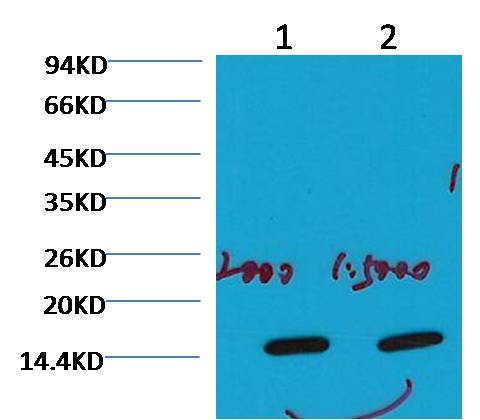
Western blot analysis of Hela with COX IV Mouse mAb(SY100A-6C8) diluted at
1)1:2,000
2)1:5,000
Western Blot
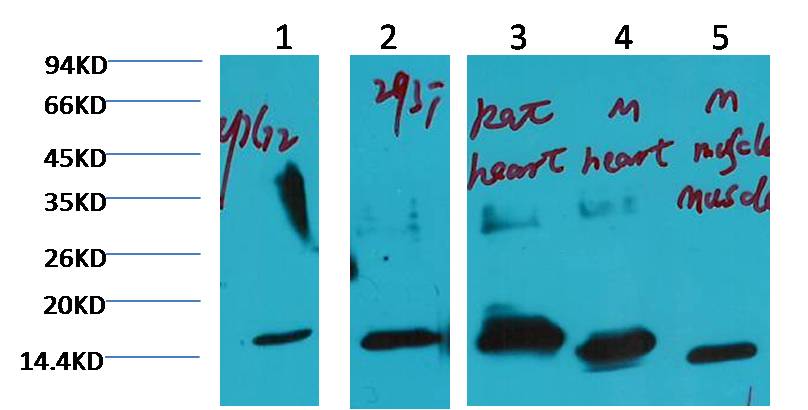
Western blot analysis of 1) HepG2, 2) 293T, 3) Rat Heart, 4) Mouse Heart, 5) Mouse Muscle tissue with COX IV Mouse mAb(SY100A-6C8) diluted at 1:3,000.
Western Blot
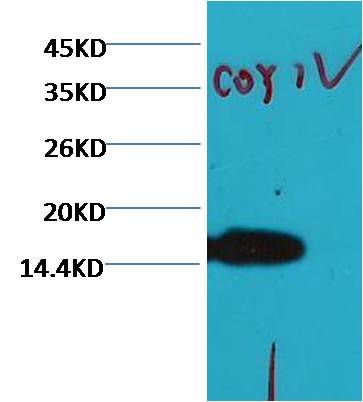
Western blot analysis of Hela with COX IV Mouse mAb(SY100A-6C8) diluted at 1:3,000.
IF
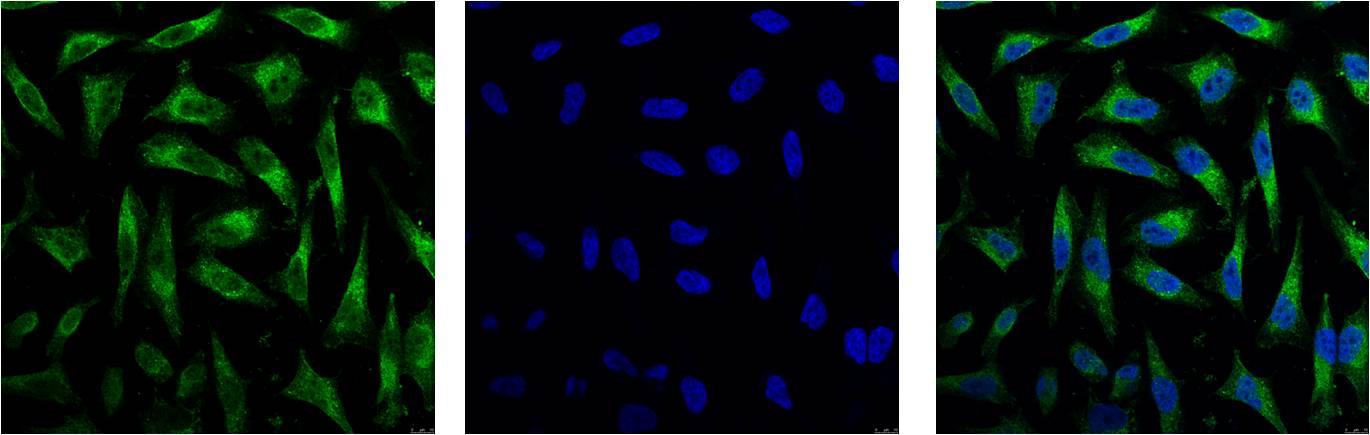
IF analysis of Hela with SY046(Left) and DAPI (Right) diluted at 1:100.
产品描述
|
蛋白名称 |
COX IV |
|
来源 |
Mouse monoclonal antibody is prepared by immunizing synthetic peptide coupled to KLH. |
|
特异性 |
The COX IV antibody can recognize endogenous COX IV proteins. |
|
存储 |
Store at -20°C. Stable for one year from the date of shipment. |
|
组成 |
in PBS, pH 7.4, containing 0.02% sodium azide and 50% glycerol. |
|
稀释比例 |
WB 1:1,000-3,000 IF 1:100-200 (Optimal dilutions should be determined by the end user) |
|
浓度 |
1 mg/ml |
|
实测条带 |
15kD(Observed) |
|
克隆性 |
Monoclonal |
|
同种型 |
IgG1 |
|
别名 |
COX 4, Cox4a, COX4B, COXIV, Cytochrome c oxidase subunit 4 isoform 1 mitochondrial, MGC105470, dj857M17.2, Cytochrome c oxidase subunit IV |
背景
|
The enzyme cytochrome c oxidase or Complex IV, EC 1.9.3.1) is a large transmembrane protein complex found in bacteria and the mitochondrion.It is the last enzyme in the respiratory electron transport chain of mitochondria (or bacteria) located in the mitochondrial (or bacterial) membrane. It receives an electron from each of four cytochrome c molecules, and transfers them to one oxygen molecule, converting molecular oxygen to two molecules of water. In the process, it binds four protons from the inner aqueous phase to make water, and in addition translocates four protons across the membrane, helping to establish a transmembrane difference of proton electrochemical potential that the ATP synthase then uses to synthesize ATP.
|
暂无相关说明书文档,如需获取请联系客服。